When most people think of Costa Rica, they picture the beaches, or the incredible wildlife of the tropical forests. But one of my favorite places to visit is beautiful Cartago, where there is always a fog rolling in, just obscuring the view of the mountains. It is an area that is green and lush but with a mild climate that always makes for perfect sweater weather. Read on to discover more fun facts about Cartago, an easy day trip from the capital San José.
This article is part of our Fun Facts series. Be sure to check out other fun facts about Latin America, or Central America and the Caribbean!
1. It is a city and a province.
Six of the seven provinces in Costa Rica share a name with their major city. San José is located in the province of San José, the city of Cartago is located in the province of Cartago, and so on. (The only province for which this is not true is Guanacaste, as the town of Guanacaste was renamed Liberia in the 19th century).
2. It is part of the largest population center in Costa Rica.
This is true even though the population of Cartago is relatively small. (The city’s population was just over 160,000 as of 2017, according to the UN). The city of Cartago is part of the Central Valley of Costa Rica, also referred to as the Greater Metropolitan Area, the largest urban agglomeration in the country (population 3.16 million as of 2019). While the Greater Metropolitan Area is made up of three provincial capitals, including the city of Cartago, it is centered around the nation’s capital, San José. In fact, a large portion of Cartago’s residents work in nearby San José.
3. It is home to one of the largest archeological discoveries in the country.
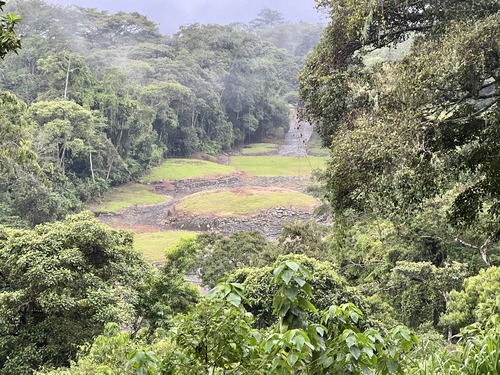
The Guayabo National Monument is one of the largest and best preserved pre-Colombian sites in Costa Rica. The site demonstrates a high level of urban planning and technical knowledge, with public works like community meeting spaces, aqueducts, and a system of roads connecting it to other settlements in the area.
4. It is the oldest European settlement in Costa Rica.
Founded in 1563 by Juan Vasquez de Coronado, Cartago was the first successful European settlement in what was to become Costa Rica. (This came more than six decades after Columbus set foot on the Costa Rican coast, since Costa Rica did not have the natural resources the Spanish sought). Unfortunately, no colonial buildings survive today, as the city has been damaged frequently by earthquakes, flooding, and volcanic eruptions.
5. It is named after a classical city in the ancient world.
Spanish explorer Coronado gave the new city he founded the name Carthage, after the famous Phoenician city in North Africa (today Tunis). The original Phoenician name (Qart Hadasht) means “New City.” Of course, many of the first residents of the new settlement in Costa Rica gave it the nickname “City of Mud,” because it flooded frequently.
6. It was the first capital of Costa Rica.
More fun facts about Cartago you may or may not have known: it was the capital of Costa Rica for more than 2 and a half centuries, through the entire colonial period and the first years of independence from Spain. It wasn’t until 1823 that the capital was moved to the larger city of San José. This was not a peaceful transition but the result of an internal war that came to a head at the Battle of Ochomongo, just outside Cartago. The forces of Cartago lost and so had to relinquish the capital.
7. It is the site of annual pilgrimage.
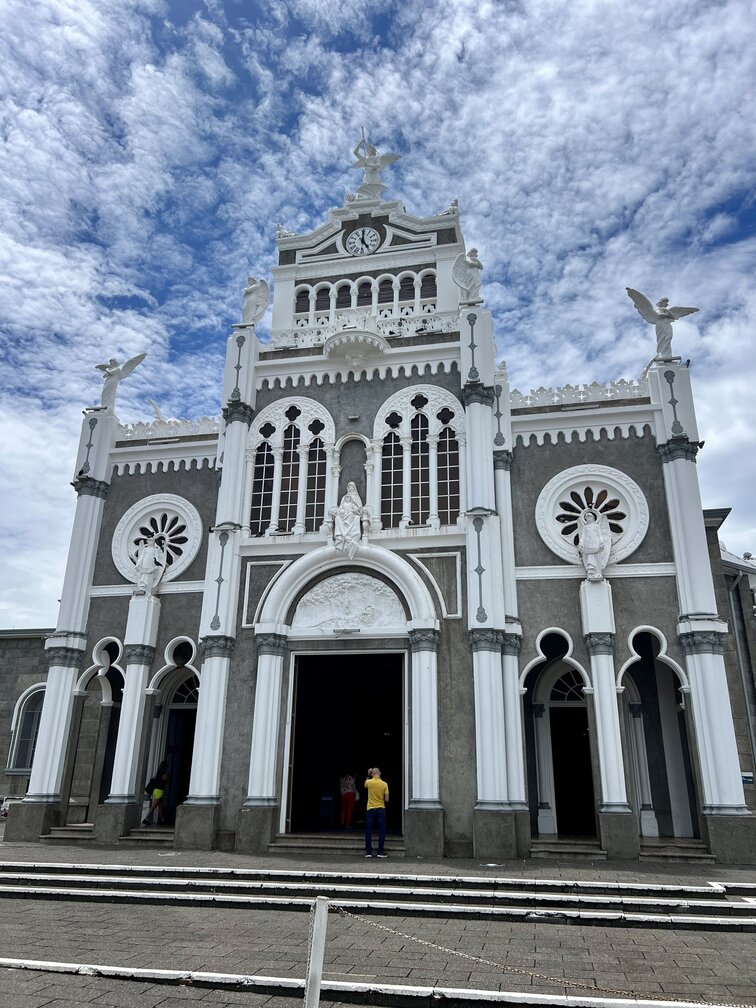
Every year on August 2, millions of people from throughout the country and other parts of Central America arrive in Cartago, on horseback, on foot, and sometimes on their knees. They are coming to pay their respects to La Negrita, the black Madonna, who is the patron of Costa Rica. Her statue was discovered, according to legend, on a rock next to a stream by a young peasant girl in 1635. A gorgeous church, la Basílica de Nuestra Señora de los Ángeles, now stands on the site, and people come to ask the Virgin for a blessing and to take holy water from the stream, which still flows under the church.
8. It is home to a famously incomplete church.
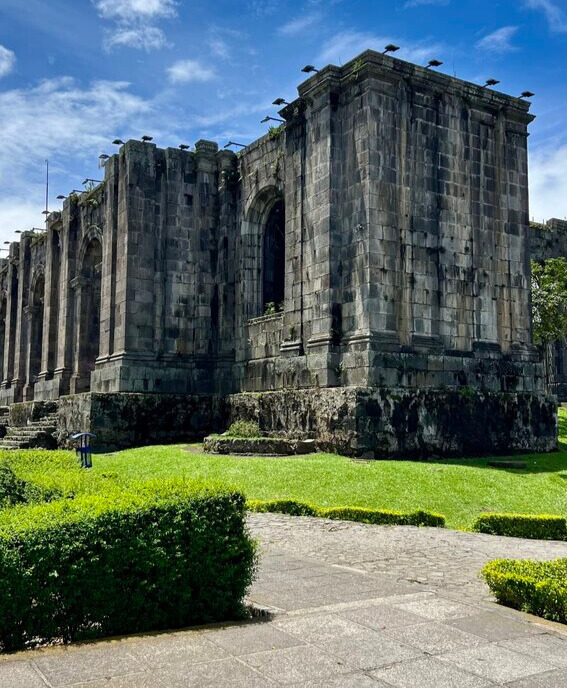
In 1910 Costa Rica was hit by one of its most devastating earthquakes. Evidence of this can still be seen in the remarkable ruins of the Santiago Apostle Parish, located in the center of the city of Cartago. The Romanesque style building is technically not a ruin, since it had never been completed. Churches have been built on the site since 1575 but have been damaged and then demolished over the years because of earthquakes. This last attempt at construction began in 1870 but was finally abandoned after the 1910 earthquake. Today it is a public park and is still occasionally used for mass.

9. It is home to an active volcano.
Irazú Volcano is located 3,432 meters above sea level, making it the highest volcano in Costa Rica. It has five craters and attracts thousands of visitors a year. It last erupted in 1994, but it is perhaps best known for its 1963 eruption, which took place when US president John F. Kennedy was visiting Costa Rica. This was the first of a series of eruptions that took place over the next two years, causing flooding and mudslides in Cartago and covering the nearby capital San José in ash. My husband’s parents recalled having to cover their faces with a cloth every time they went outside during this period.
10. It is home to the most haunted building in Costa Rica.
The Durán Sanitorium was founded in 1918 by Carlos Durán Cartín, a physician and former president of Costa Rica. It was designed to house patients of tuberculosis, which was still a major killer at the time. It was thought that the altitude and cool, wet climate would be ideal for TB patients. The facility also housed mental patients. When treatments for TB improved mid-century, the sanitorium was seen as less necessary and closed in 1963. The facility was later used as an orphanage and then a prison, though it closed permanently in the 1970s, after it was damaged from an eruption of Volcano Irazú. How about this for fun facts about Cartago!
Rumors of ghosts, including a phantom monk, began while the sanitorium was in operation and have only increased over the years. The sanitorium is now open for tourists, and we saw a school group visiting the day we stopped by. (I say “stopped by” because none of us really felt like going in!) It was even featured in an episode of Ghost Hunters International.
I hope you enjoyed these fun facts about Cartago and, perhaps, when you visit there, this could be a quick guide for you about the city!
Related Posts:
Costa Rica and Finland—Why They’re Consistently the Happiest Countries


Leanna
Latest posts by Leanna (see all)
- Ayyam-i-Ha Around the World - February 23, 2026
- African American Women Leaders: New Picture Book Biographies - February 2, 2026
- Raising Hopeful Kids In Difficult Times - January 27, 2026
